An air conditioner can sound completely normal and still fail to cool the house. The fan may be running, air may be coming through the vents, and the thermostat may show the correct setting, yet the indoor temperature barely changes.
It is one of the most frustrating HVAC problems a homeowner can experience. The causes behind this range from simple fixes you can check in five minutes to system-level issues that need a professional.
In this blog, you will learn what to look for and what each cause means for the system. You will also see how to tell when you can handle it yourself versus when it is time to call for AC repair.
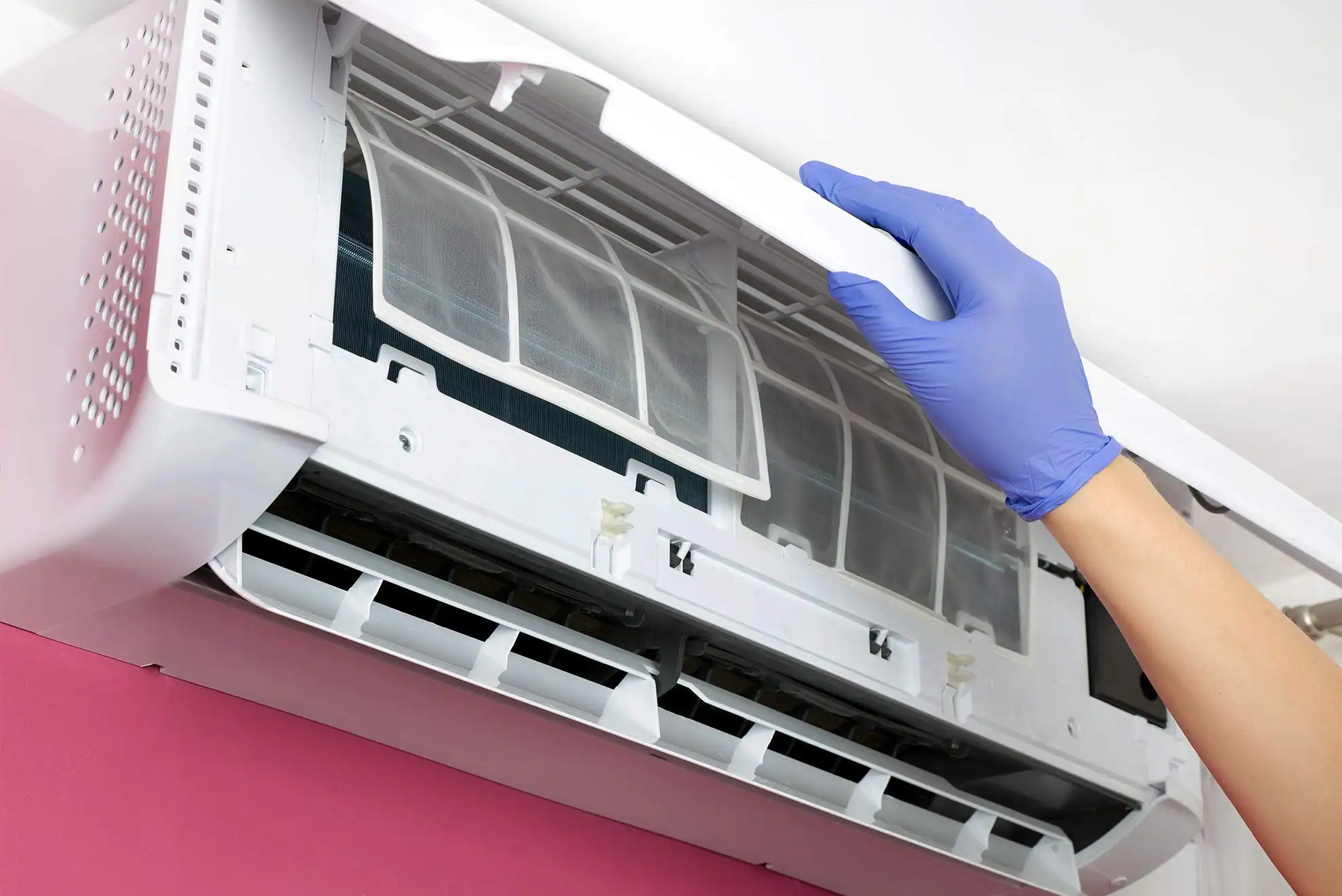
Check the Air Filter First
This is the simplest and most overlooked cause of an AC that runs without cooling effectively. A clogged air filter restricts the airflow that the system depends on to function.
When the filter is dirty, less air passes over the evaporator coil. The coil cannot absorb heat efficiently, so the air that does make it through comes out barely cool. The system runs longer trying to compensate, energy consumption climbs, and the house stays warm.
In severe cases, restricted airflow causes the evaporator coil to freeze over entirely. When ice forms on the coil, cooling stops completely even though the fan is still blowing.
What to do: Pull the filter out and hold it up to a light. If you cannot see through it, replace it. This takes less than five minutes and is the first thing any HVAC technician checks on a service call. If the system has been running with a clogged filter for a while, give it 30 minutes after replacing the filter to see if cooling improves.
Thermostat Issues
The thermostat controls what the AC does. If it is sending the wrong signal, the system responds accordingly, even if the result makes no sense from where you are standing.
Common thermostat problems that mimic a cooling failure:
- The setting was accidentally switched to “fan only” instead of “cool.” The fan runs, but the compressor never engages.
- The temperature is set higher than the room temperature. The system thinks the home is already at the target and does not activate cooling.
- The thermostat is placed near a heat source, a sunny window, or a supply vent. It reads the local temperature rather than the room’s actual temperature and sends inaccurate signals.
- The thermostat’s batteries are low, or the unit is malfunctioning. It displays a set temperature but is not communicating correctly with the system.
What to do: Verify the mode is set to “cool” and the fan is on “auto.” Set the temperature five degrees below the current room reading and wait a few minutes. If the compressor does not kick on, the thermostat may need recalibration or replacement.
The Outdoor Unit Is Blocked or Dirty
The condenser unit outside the house is where the system releases the heat it removed from the air inside. If that unit cannot do its job, the cooling cycle breaks down.
Debris buildup on the condenser coils is one of the most common causes. Grass clippings, leaves, dirt, and dust coat the fins over time and reduce the unit’s ability to dissipate heat. The system runs, the refrigerant circulates, but the heat has nowhere to go.
Obstructions around the unit matter too. Shrubs, fencing, or stored items placed too close to the condenser restrict airflow and produce the same effect.
What to do: Turn the system off and visually inspect the outdoor unit. Clear any debris from the area and gently rinse the condenser coils with a garden hose from the inside out. Maintain at least two feet of clearance on all sides of the unit. If the coils are heavily caked with dirt, a professional cleaning with specialized tools is more effective than a hose rinse.
Low Refrigerant from a Leak
Refrigerant is the substance that absorbs heat from your indoor air and carries it outside. The system does not consume refrigerant the way a car consumes fuel. If the refrigerant level is low, it means there is a leak somewhere in the system.
When the charge drops below the required level, the evaporator coil cannot absorb enough heat to cool the air effectively. The system runs continuously, but the output temperature stays lukewarm. You may also notice ice forming on the refrigerant lines or the evaporator coil itself, which seems contradictory but is a direct result of low pressure in the system.
Signs of a refrigerant leak:
- The system runs but the air from the vents is not cold
- Ice visible on the refrigerant lines or the indoor coil
- A hissing or bubbling sound near the indoor or outdoor unit
- Cooling performance has been declining gradually over weeks
What to do: This is not a DIY repair. Refrigerant handling requires EPA certification, and the leak itself needs to be located and repaired before the system is recharged. Call an HVAC technician. Running the system with low refrigerant causes the compressor to work harder and can lead to compressor failure, which is the most expensive component to replace.
Frozen Evaporator Coil
A frozen coil is both a symptom and a cause. It is usually triggered by one of two things: restricted airflow from a dirty filter or low refrigerant from a leak. Either condition drops the coil temperature below freezing, and moisture in the air condenses and freezes on the surface.
Once ice forms on the coil, airflow is blocked further, and cooling stops entirely. The system continues running; the fan pushes air, but the air bypasses the frozen coil without being cooled.
What to do: Turn the system off and switch the fan to “on” to circulate warm air over the coil and melt the ice. This can take several hours. Do not try to chip or scrape ice off the coil. Once the ice has melted, check the filter. If the filter was clean and the coil still froze, the issue is likely low refrigerant and requires a technician.
Ductwork Leaks
The cooled air your system produces has to travel through the ductwork to reach the rooms in your home. If the ducts have gaps, disconnections, or deteriorated seals, a portion of that cooled air escapes into the attic, crawl space, or wall cavities before it ever reaches a vent.
Studies estimate that duct leaks can waste 20 to 30 percent of the air a system produces. That means the AC could be cooling properly at the unit, but the house never benefits from it because the delivery system is losing air along the way.
Signs of duct leaks include:
- Rooms that are consistently warmer than others despite open vents
- Higher energy bills without a change in usage or settings
- Visible gaps or disconnected sections in accessible ductwork
- Dust buildup around vent registers
What to do: Inspect any ductwork you can access in the attic, basement, or crawl space. Look for visible gaps, disconnected joints, or deteriorated tape. Sealing accessible leaks with mastic sealant or metal-backed tape can help. For a full evaluation, an HVAC technician can perform a duct pressure test and seal the system properly.
Compressor Failure
The compressor is the heart of the AC system. It pressurizes the refrigerant and drives the cooling cycle. When it fails, the fan still runs and air still moves, but the air is not cooled.
A failing compressor may produce:
- A humming or clicking sound at the outdoor unit without the compressor engaging
- The outdoor fan running while the air from the indoor vents stays warm
- The system tripping the circuit breaker repeatedly
What to do: Compressor issues require professional diagnosis. If the compressor has failed entirely, the decision becomes whether to replace the compressor or replace the entire AC system. In older units, full AC installation is often the more cost-effective path because other components are likely nearing the end of their lifespan as well.
Work Through the List Before Making the Call
Some of these causes take five minutes to check. A dirty filter, a thermostat setting, a blocked condenser. Starting with those saves you the cost of a service call for something you could have resolved yourself.
When the simple checks do not reveal the issue, the problem is usually refrigerant, electrical, or mechanical. Those require a trained technician with the tools and certification to diagnose and repair safely. Continuing to run an AC that is not cooling properly puts strain on the compressor and can turn a repairable issue into a replacement.
If your AC has been running without cooling and the basic checks have not solved it, the issue is deeper than the surface. Cisneros Brothers Plumbing, Electrical, Heating & Air can diagnose the cause and get the system back to where it should be.
We serve homeowners across Southern California with honest assessments and the kind of HVAC service that fixes the actual problem. Give us a call and let us figure out what your system needs.

With Isaac Cisneros leading as President of Marketing, the company’s reach continues to expand, strengthening its presence in both the industry and the community.