Is your sewer line acting up, but the thought of tearing apart your driveway, lawn, or landscaping sounds almost as bad as the plumbing problem itself?
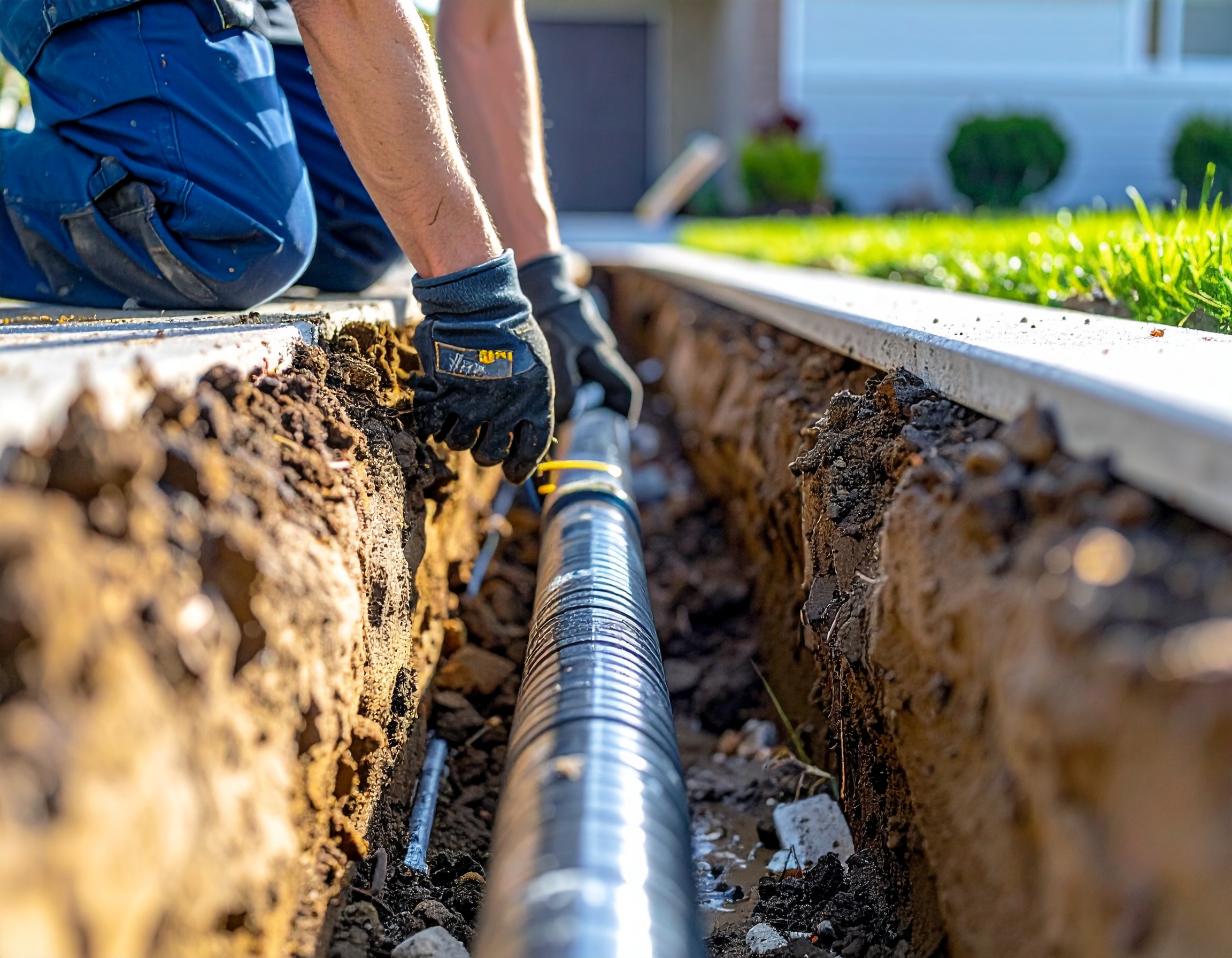
That concern is understandable. Traditional sewer replacement can involve extensive digging, especially when damaged pipes run beneath concrete, gardens, walkways, or other finished areas. Depending on the condition of the line, however, excavation may not always be necessary.
Trenchless sewer line repair allows a plumber to repair or replace certain underground sewer lines with far less digging than traditional methods. For the right property and pipe condition, it can mean less disruption, faster completion, and fewer restoration costs afterward.
But trenchless methods are not automatically the right solution for every sewer problem. This guide explains how trenchless repair works, when it may be recommended, what homeowners should expect, and how a professional plumbing inspection determines the best approach.
What Is Trenchless Sewer Line Repair?
Traditional sewer line repair often requires digging a trench along the damaged section of pipe so plumbers can access it directly.
Trenchless methods take a different approach.
Instead of exposing the entire sewer line, a plumber typically works through one or two smaller access points. Specialized equipment is then used to repair the existing pipe or install a replacement line underground.
The two most common trenchless methods are:
- Pipe lining
- Pipe bursting
Both are designed to reduce the amount of excavation required, but they solve different types of sewer problems.
How Does Pipe Lining Work?
Pipe lining, sometimes called cured-in-place pipe lining, creates a new pipe surface inside the existing sewer line.
The process generally begins with a sewer camera inspection. The line may also need to be cleaned so debris, roots, or buildup do not interfere with the installation.
A flexible liner coated with resin is then inserted into the damaged pipe. Once positioned correctly, the liner is expanded against the inside walls of the old pipe and allowed to cure.
The result is a new structural lining inside the existing sewer line.
Pipe lining may be useful for problems such as:
- Cracks
- Small gaps
- Corrosion
- Minor root intrusion
- Deteriorated pipe walls
- Certain leaking joints
Because the existing pipe remains in place, extensive excavation may be avoided.
What Is Pipe Bursting?
Pipe bursting is another form of trenchless sewer line repair, but instead of lining the existing pipe, it replaces it.
A specialized bursting head is pulled through the old sewer line. As it moves forward, it breaks the damaged pipe outward while simultaneously pulling a new pipe into its place.
This method may be considered when the existing sewer line is too badly damaged for lining but still follows a usable underground path.
Pipe bursting can be particularly useful when a line has:
- Severe deterioration
- Multiple cracks
- Significant structural failure
- Sections that cannot be reliably lined
A plumber needs to evaluate the pipe carefully before recommending this approach because certain conditions can make pipe bursting impractical.
What Problems Can Trenchless Sewer Repair Fix?
Not every sewer issue requires replacement.
Some problems can be handled through cleaning, root removal, or localized sewer line repair. Others involve damage serious enough that lining or replacement makes more sense.
Trenchless techniques may be considered when a sewer line has:
Cracked Pipes
Older sewer lines can crack because of shifting soil, age, corrosion, or external pressure.
If the pipe still has enough structural integrity, lining may help seal those damaged areas.
Root Intrusion
Tree roots can enter sewer lines through small cracks or loose joints.
Minor root intrusion may be removed through cleaning, but repeated intrusion often indicates an underlying pipe defect that needs repair.
Corrosion
Certain older pipe materials can deteriorate over time.
As the walls weaken, leaks and recurring blockages may become more common.
Leaking Joints
Sections of sewer pipe are often connected by joints that can shift, separate, or deteriorate.
Depending on the extent of the damage, trenchless lining may help seal the affected area.
Aging Sewer Lines
Older sewer systems may develop several problems at once.
A professional plumbing inspection can determine whether continued spot repairs are practical or whether rehabilitation of a larger section makes more sense.
What Are the Benefits of Trenchless Sewer Line Repair?
The biggest advantage is reduced excavation, but that can lead to several other benefits for homeowners.
Less Damage to Your Property
A traditional sewer replacement may require digging through landscaping, lawns, patios, sidewalks, or driveways.
Trenchless methods usually require much smaller access points.
That can help preserve more of the property surrounding the sewer line.
Less Restoration After the Repair
Excavation does not end when the new pipe is installed.
Homeowners may also need to repair grass, landscaping, concrete, pavers, or other surfaces disturbed during the project.
Reducing excavation can reduce some of those additional costs and headaches.
Faster Completion in Many Cases
Because there may be less digging and backfilling involved, trenchless work can sometimes be completed more quickly than traditional replacement.
The actual timeline depends on the length of the line, access conditions, pipe damage, and repair method.
Long-Term Pipe Rehabilitation
Trenchless methods are not temporary patches when used under the right conditions.
Pipe lining and pipe bursting are designed to provide a durable solution to damaged sewer infrastructure.
Is Trenchless Sewer Repair Always an Option?
No.
This is one of the most important things homeowners should understand.
A company should not recommend trenchless sewer line repair simply because the technology is available. The existing pipe and property conditions need to support it.
Traditional excavation may still be necessary when:
- The sewer line has completely collapsed
- Sections of pipe are severely misaligned
- The existing line has major bellies or low spots
- Access is too limited
- The pipe configuration prevents proper equipment placement
- The sewer needs significant slope correction
- The damaged section requires direct exposure
That is why a sewer camera inspection is so important before deciding how to proceed.
How Does a Plumber Determine the Right Repair?
A professional plumber should first identify exactly what is happening inside the sewer line.
The evaluation may include a video camera inspection, which allows the technician to see problems that cannot be diagnosed from the surface.
The inspection can reveal:
- Cracks
- Root intrusion
- Corrosion
- Pipe separation
- Blockages
- Collapsed sections
- Standing water
- Misaligned pipe
The technician may also consider the pipe material, age, location, length of the damaged section, and access points around the property.
From there, the homeowner can be shown the options and understand why a particular sewer line repair method is being recommended.
What Are the Signs You May Need Sewer Line Repair?
Sewer problems often give warning signs before the line fails completely.
Pay attention to symptoms such as:
- Multiple drains backing up at the same time
- Recurring drain clogs
- Toilets gurgling when other fixtures are used
- Sewage odors around the home or yard
- Slow drainage throughout the property
- Wet or unusually green areas in the yard
- Sewage backing up through floor drains
- Repeated need for sewer cleaning
One isolated clogged sink usually does not mean your sewer line needs replacement.
When several fixtures are affected or the same sewer problem keeps coming back, the issue may be deeper in the plumbing system.
Trenchless Repair vs. Traditional Sewer Replacement
Neither method is automatically better in every situation.
Traditional excavation provides direct access to the damaged sewer line, which can be necessary for severe structural problems or major alignment issues.
Trenchless repair is often attractive because it reduces digging, but it depends heavily on the condition and layout of the existing line.
The right choice comes down to questions such as:
- What exactly is damaged?
- How much of the sewer line is affected?
- Is the existing pipe structurally suitable for lining?
- Has the pipe collapsed?
- Does the slope need correction?
- What surfaces are located above the sewer line?
- What repair method provides the strongest long-term solution?
A trustworthy plumber should explain these factors instead of pushing one method for every home.
What Should Homeowners Ask Before Approving the Work?
Before moving forward with any major sewer line repair, make sure you understand what the inspection found and why a specific solution is being recommended.
Useful questions include:
- Can I see the sewer camera footage?
- Where exactly is the damaged section?
- Is trenchless repair appropriate for the entire line?
- Would pipe lining or pipe bursting be used?
- Are there areas that still require excavation?
- What property surfaces could be affected?
- What does the repair include?
- What happens if additional damage is discovered?
Clear answers help you understand what you are paying for and reduce surprises once work begins.
Protect Your Property Without Ignoring the Sewer Problem
A damaged sewer line is not something homeowners want to deal with, but delaying repair can make the situation worse.
Recurring backups, sewage odors, root intrusion, and deteriorating pipes can eventually lead to more extensive damage and greater disruption.
For many properties, trenchless sewer line repair offers a way to solve serious underground plumbing problems without excavating the entire sewer route.
The key is knowing whether your sewer line is actually a good candidate.
Cisneros Brothers Plumbing, Electrical, Heating & Air provides professional sewer inspections and sewer line repair services to help homeowners understand the condition of their underground pipes and choose the appropriate solution.
If you are dealing with repeated sewer problems, contact Cisneros Brothers Plumbing, Electrical, Heating & Air and have an experienced plumber inspect the line before another backup catches you by surprise.

With Isaac Cisneros leading as President of Marketing, the company’s reach continues to expand, strengthening its presence in both the industry and the community.