When a sewer line stops working the way it should, the conversation usually lands on two options: repair the damaged section, or replace the line entirely.
Both exist for good reason. Neither is automatically the better call.
The difference between the two is not always obvious from the surface, and most homeowners encounter this decision for the first time when they are already dealing with a problem. Knowing how plumbers evaluate that choice makes it easier to understand the recommendation you receive and whether it fits what your pipe actually needs.
That evaluation starts underground, with what the pipe looks like from the inside.
What a Sewer Camera Inspection Actually Shows
Every reliable sewer line recommendation starts with a camera inspection. The footage is what turns a guess into a diagnosis.
A small waterproof camera is fed into the sewer line and records the interior in real time. The footage shows the pipe’s condition in detail: cracks, corrosion, root intrusion, joint separation, bellied sections, and collapse points. It also reveals the pipe material, the diameter, and how much of the line is affected.
This footage is what the repair-vs-replacement decision is based on. Without it, any recommendation is an assumption. With it, the plumber can match the method to the actual damage rather than treating symptoms from the surface.
When Sewer Line Repair Is the Right Call
Sewer line repair makes sense when the damage is localised, the pipe still has structural integrity, and the issue can be resolved without replacing the entire line.
Conditions where repair typically fits:
- A crack or joint separation in one section of the line, with the rest of the pipe in stable condition
- Root intrusion that has entered through a specific weak point but has not spread across the full length
- Corrosion or wear that is concentrated in one area rather than distributed throughout
- A pipe that still holds its shape and has enough wall thickness to support a repair method
Trenchless Sewer Line Repair Options
When repair is appropriate, trenchless methods can often handle the work with minimal disruption to the property.
1. Pipe lining (CIPP)
A resin-coated liner is inserted into the damaged section, inflated against the pipe walls, and cured in place. Once hardened, it seals cracks, bridges joint gaps, and creates a smooth new interior surface. The original pipe stays in the ground. No full-length trench required.
2. Pipe bursting
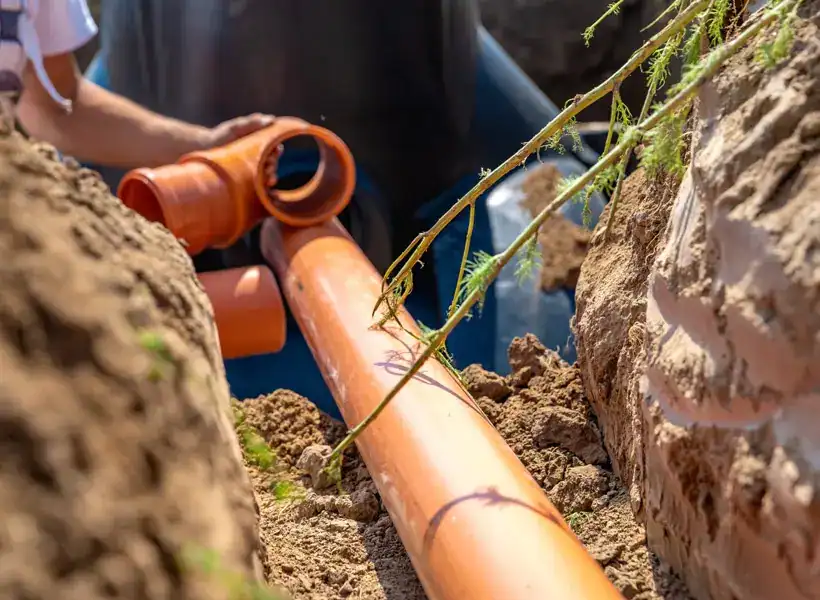
A new pipe is pulled through the old one, breaking the old pipe outward as it advances. This method replaces the damaged section with new material without excavating a continuous trench. It works well when the pipe needs to be replaced in a specific area, but the full line does not.
Both methods reduce surface disruption significantly compared to traditional excavation, which matters when the sewer line runs under a driveway, landscaping, or a structure.
When Replacement Becomes the Better Option
Replacement makes sense when the damage is too widespread for a localised fix, or when the pipe’s overall condition means a repair would only be temporary.
Conditions where replacement typically fits:
- The pipe has collapsed or lost its structural shape in multiple sections
- Corrosion or deterioration extends across the full length of the line
- The pipe material is at or past its expected lifespan and continuing to degrade
- Previous repairs have failed, or the same section keeps requiring attention
- Root intrusion is so extensive that the pipe cannot support a liner, or a lining would only seal a fraction of the damage
Replacement is the larger project. It involves excavating and removing the failed pipe, installing new material, and restoring the surface above. It takes longer, disrupts more, and costs more upfront. But when the pipe’s condition no longer supports a repair, replacement is what prevents the homeowner from paying for the same problem repeatedly.
The Factors That Guide the Decision
Plumbers do not choose between repair and replacement based on a default preference. The decision follows what the camera shows, and several specific factors shape which direction the footage points.
- Extent of damage:
Is the problem in one section or spread across the line? Localised damage points toward repair. Widespread damage points toward replacement.
- Pipe material and age:
Older clay and cast iron pipes may have decades of corrosion that makes the entire line vulnerable, even if the visible damage is in one spot. Newer PVC lines are more likely to have isolated damage that responds well to targeted repair.
- Structural integrity:
Can the pipe physically support a trenchless liner? If the pipe has collapsed or deformed, lining is not an option. The pipe needs to hold its shape for trenchless methods to work.
- History of previous issues:
A line that has been repaired or cleared multiple times is telling a story. If the problems keep returning, the underlying condition is usually beyond what another repair can fix.
- Location and access:
Pipes under driveways, buildings, or mature landscaping may favour trenchless repair where possible, simply because the cost and disruption of excavation in those locations is disproportionate.
A plumber evaluating these factors against the camera footage is how the recommendation gets made. The method matches the condition. Not the other way around.
Questions Worth Asking Before You Agree to Either Option
A few specific questions can help you evaluate whether the recommendation you receive is grounded in what the camera actually showed or based on assumptions about your pipe.
If a plumber recommends repair or replacement, ask:
- Can I see the camera footage and have the damage explained?
- Is the issue localised or spread across the full line?
- What is the pipe material, and how old is it?
- If repair is recommended, how long is it expected to last given the pipe’s overall condition?
- If replacement is recommended, is trenchless an option, or does the situation require full excavation?
- Has this section been repaired before?
A plumber who can answer these clearly, using the footage as reference, is giving you a recommendation grounded in evidence. That is the standard you should expect.
The Right Fix Starts With the Right Diagnosis
Sewer line repair and replacement are not competing options. These are different solutions for different conditions. The right one depends entirely on what the camera shows inside the pipe.
A recommendation made before an inspection is a guess. A recommendation made after one is a decision backed by evidence. That distinction matters when the stakes are this high.
Cisneros Brothers Home Services runs sewer camera inspections and offers both trenchless sewer line repair and full replacement across Southern California.
If your sewer line needs work, or you suspect it might, schedule an inspection and see the footage yourself before committing to any method.

With Isaac Cisneros leading as President of Marketing, the company’s reach continues to expand, strengthening its presence in both the industry and the community.